What Does a Paraeducator Actually Do? (And What They Don’t)
A clear breakdown of paraeducator responsibilities, requirements, and what schools really expect.
Paraeducators—also known as paraprofessionals or teacher assistants—are essential members of today’s classrooms. Yet, the role is often misunderstood.
If you’ve ever wondered:
- What does a paraeducator actually do every day?
- How is a paraeducator different from a teacher?
- Is this the right career path for me?
You’re in the right place.
I'm going to explan to you exactly what paraeducators do (and don’t do), the skills and training required, and what schools wish aspiring paras understood before applying.

What Is a Paraeducator?
A paraeducator is an education support professional who works under the supervision of a licensed teacher. Your role is to support students, reinforce instruction, and help create a safe, inclusive learning environment.
You are not a replacement for the teacher—you are a critical support system that helps students succeed academically, socially, and emotionally.
Quick Answer: A paraeducator supports students academically, behaviorally, and with personal care under a teacher’s supervision. They do not replace teachers or lead instruction.
Supporting Students (Not Replacing Teachers)
One of the most important things to understand about paraeducator jobs is this:
You support learning—you don’t lead the classroom.
Teachers are responsible for lesson planning, instruction, grading, and curriculum decisions. As a paraeducator, you:
- Provide one-on-one or small-group support
- Reinforce lessons already taught
- Help students stay engaged and on task
- Assist with classroom routines and transitions
💭 Can you see yourself doing this?
You enhance learning while teachers lead instruction.

Core Paraeducator Responsibilities
1.📚 Academic Support
You help students understand instructions, complete assignments, and practice skills taught by the teacher. This may include:
- Reading support
- Math reinforcement
- Small-group instruction
- Accommodations for students with learning differences
2. 💛 Behavioral Support
Many paraeducators help students regulate emotions and behavior by:
- Redirecting off-task behavior
- Supporting positive behavior plans
- Modeling social skills
- Providing calm, consistent guidance
3. 🧠 Emotional Support
Depending on the setting, you may assist students with:
- Mobility
- Feeding
- Toileting
- Medical or safety needs
This support is always done with dignity, respect, and proper training.
4. 🧍 Personal Care Support

You Address Diverse Student Needs Every Day
No two students are the same—and no two paraeducator days are either.
You adapt constantly:
- Different learning styles
- Different emotional needs
- Different levels of independence
Your ability to observe, adjust, and respond makes you invaluable in the classroom.
A Typical Day as a Paraeducator
- Morning arrival & student check-ins
- Small group support
- Behavior redirection
- Lunch duty
- One-on-one assistance
- End-of-day documentation
📝 Which part of the job excites you most?
Training Requirements for Paraeducators
What Education Do You Need?
Requirements vary by state and district, but commonly include:
- High school diploma or GED
- Some college coursework (preferred in many districts)
- Passing a paraeducator exam or ParaPro assessment (in some states)
Helpful Certifications
While not always required, these can boost your hiring chances:
- CPR / First Aid
- Behavior management training
- Special education support training
Just as important as credentials?
Patience, empathy, communication, and willingness to learn on the job.
What Paraeducators Do Not Do
Understanding boundaries is critical for success.
Paraeducators typically do not:
- Create lesson plans
- Grade independently
- Make curriculum decisions
- Replace teachers when absent
- Discipline students without direction
Clear role understanding protects you and supports the whole team.
💡 Understanding boundaries protects you and the teacher.
What Schools Wish Aspiring Paraeducators Knew
Schools value paraeducators who:
- Communicate openly with teachers
- Accept feedback and guidance
- Respect professional boundaries
- Build strong student relationships
- Stay flexible and adaptable
This role requires emotional resilience—but it’s also deeply rewarding.
💬 Honestly:
Some days are hard. Most days are worth it.
Who Is This Job Perfect For?
You may thrive as a paraeducator if you:
- Love working with children
- Enjoy collaboration
- Are patient and nurturing
- Want to make a real difference
- Are exploring a future in education
Many paras go on to become teachers, specialists, or education leaders.
🟡 Did You Know?
Many paraeducators go on to become certified teachers.

Career Growth Opportunities
With experience, paraeducators often:
- Pursue teaching certification
- Specialize in special education
- Move into leadership or training roles
- Expand skills through professional development
This role can be a starting point—or a lifelong calling.
👉 Save this post for later if you're exploring paraeducator jobs.
Got Questions? I got Anwers!
A paraeducator supports students throughout the school day by reinforcing lessons, assisting with classroom activities, providing one-on-one or small-group support, and helping with behavioral or personal care needs when required. Daily tasks vary depending on the school setting and student needs, but the focus is always on supporting—not replacing—the teacher.
Teachers are responsible for lesson planning, instruction, grading, and curriculum decisions. Paraeducators work under a teacher’s supervision to support students, reinforce instruction, and help maintain a positive learning environment. Paraeducators do not lead the classroom independently.
Yes. The terms paraeducator and paraprofessional are often used interchangeably. Some districts may also use the term teacher assistant. While job titles may differ, the core responsibilities are typically very similar.
No. While many paraeducators support students with special needs, paraeducators can work in general education classrooms, early childhood programs, intervention groups, and other educational settings. The role depends on the school’s needs.
Most paraeducator positions require a high school diploma or GED. Some districts prefer or require college coursework, an associate degree, or passing a paraeducator exam such as the ParaPro Assessment. Requirements vary by state and district.
Not always. Some states and school districts require certification or an assessment, while others provide on-the-job training. Certifications such as CPR, First Aid, or behavior management training can improve your chances of being hired.
For people who enjoy working with students, supporting learning, and being part of a school community, paraeducation can be a very rewarding career. Many paraeducators also use this role as a stepping stone toward becoming teachers or other education professionals.
Yes. Paraeducators often advance by pursuing teaching credentials, specializing in special education, gaining leadership roles, or continuing professional development. The experience gained as a paraeducator is highly valuable in education careers.
The job can be challenging at times, especially when supporting students with behavioral or personal care needs. However, many paraeducators find the work deeply meaningful and rewarding, especially when they see students grow and succeed.
If you’re patient, adaptable, enjoy helping others, and are interested in working in schools, paraeducation may be a great fit. Understanding the role and expectations before applying is key to long-term satisfaction.
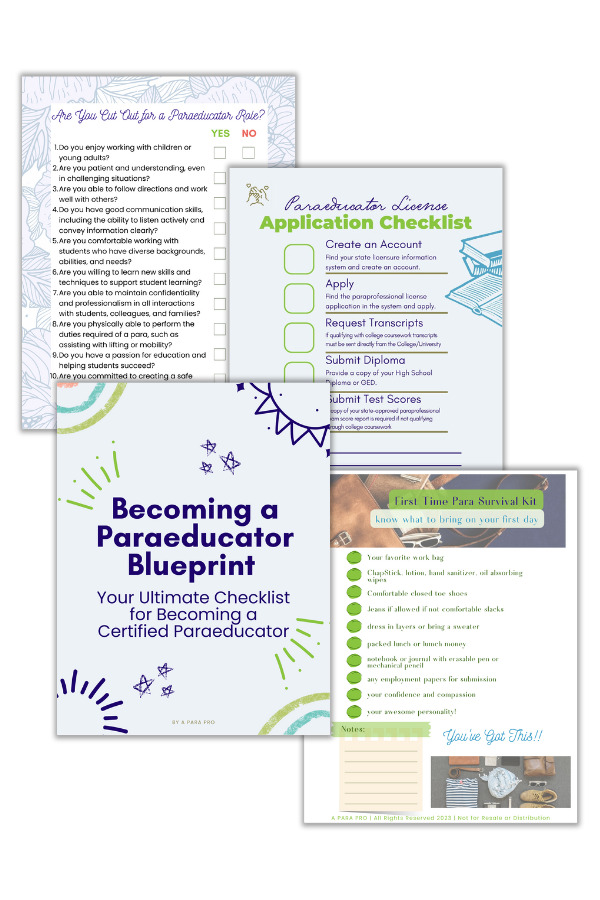
👉 Download the Start Your Para Journey Checklist (Free)
to explore requirements, expectations, and next steps with confidence.
Ask yourself: Do I enjoy working one-on-one with students?
Is Becoming a Paraeducator Right for You?
If you’re looking for a meaningful career where your work truly matters, paraeducation may be the perfect fit.
👉 Download the Ultimate Checklist for Becoming a Para (Free)
This step-by-step guide helps you:
- Understand requirements
- Prepare to apply
- Decide if this path aligns with your goals