Ready to Be a Paraeducator? 5 Clear Signs
If you’ve ever thought, “I don’t know if I’m ready to be a paraeducator,” you’re not alone.
Many people feel drawn to working in schools but hesitate because they don’t feel qualified enough, confident enough, or experienced enough. Here’s the truth that teachers and schools won’t always say out loud:
👉 Most successful paraeducators didn’t feel ready at first either.
Including myself. I remember my first day as a para, I was super nervous and clueless. An eloping child took off on me. He was in the middle of the road when we finally caught up to him. I saw things I wasn't sure I could handle. However, I had obtained my certification, and I was thrilled to secure my first teaching position, so I stuck it out because I already had what it took to be a para. If you’re on the fence, these five signs might surprise you.

1. You’re Already Good at Supporting Others
You don’t need classroom experience to be a great paraeducator. My experience when I first became a para was supporting the Sunday School teacher at church and helping my mom at home.
If you’ve ever:
- Helped a child stay focused
- Supported someone emotionally
- Assisted a teacher, coach, or caregiver
- Been the “calm one” in stressful situations
You already have one of the most important para skills: supportive presence.
2. You’re Patient (Even When Things Get Repetitive)
Para work isn’t about fast results—it’s about steady progress. I was always praised for my patience when I worked with children, and then I had 4 of my own, and I realized everyone had been lying to me. But no, seriously…
If you can:
- Explain things more than once
- Stay calm during repeated questions
- Handle slow growth without frustration
You’re more prepared than you think. Patience is a skill many people never develop—and schools desperately need it.
3. You Pay Attention to Small Details
Paras notice things others miss. I have to admit, there is magic in this one because what one para sees another may not, which is the beauty of having more eyes in the room. I recall doing a lot of observing on my first day, taking note, and modeling the paras actions that supported student success.
SHOP THE SHOP


If you tend to:
- Catch subtle changes in behavior
- Notice when someone is overwhelmed
- Remember routines and preferences
That attention to detail makes you incredibly valuable in a classroom, especially when supporting students with special needs.
4. You’re Willing to Learn (Even If You’re Nervous)
Being ready doesn’t mean knowing everything—it means being open to learning. First time paras have to be like a sponge and absorb everything because there is a lot of information thrown at you when you first start. And I'm not talking about enrollment or onboarding paperwork, I'm talking about on-the-job tips and tricks that you can only learn with hands-on training. This also means having a growth mindset.
If you:
- Ask questions instead of pretending
- Want to do things “the right way”
- Feel nervous because you care
That’s not a weakness. That’s a readiness mindset.
5. You Care More About Making a Difference Than Being Perfect
This is the biggest sign of all.
Great paraeducators aren’t perfect—they’re present.
If you’re motivated by:
- Helping students feel safe
- Supporting teachers
- Making school a better place for kids
You already have the heart for the job. Skills can be taught. Care cannot.

Why Feeling “Not Ready” Is Actually Normal
Most paraeducators, including me:
- Doubt themselves before starting
- Learn on the job
- Grow confidence with experience
Feeling unsure doesn’t mean you’re unqualified—it means you’re human.
What to Do If You Think You Might Be Ready
If these signs resonate with you, your next step doesn’t have to be overwhelming.
Start with:
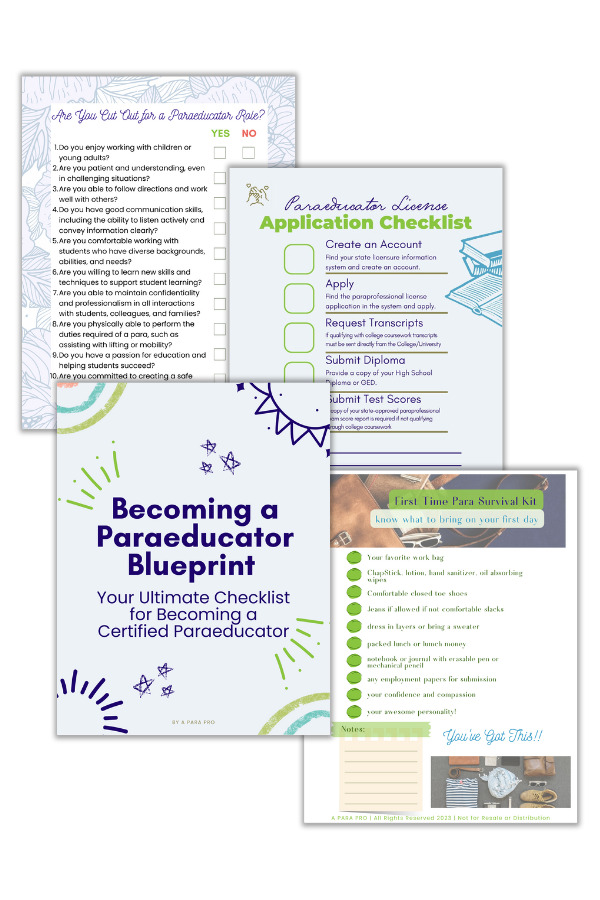
- Learning what paraeducators actually do
- Understanding certification requirements
- Building confidence one step at a time
You Might Be Closer Than You Think
If you’re waiting to feel 100% ready, here’s a gentle reminder:
👉 Most people start before they feel ready.
The right preparation can turn uncertainty into confidence.
FAQ: Becoming a Paraeducator
Do I need experience to become a paraeducator?
No. Many paras start with transferable skills and receive training on the job.
What skills matter most for paras?
Patience, communication, flexibility, and empathy.
How long does it take to feel confident?
Confidence builds over time—usually within the first few months.
What’s the best first step?
Learning the role, requirements, and expectations before applying.