How to Prep for Interviews (Even If You’re Nervous)
If the word interview makes your stomach flip, your heart race, or your mind go completely blank—you’re not alone.
Interview nerves are incredibly common, especially for aspiring paraeducators who care deeply about doing a good job but worry about saying the “wrong” thing. Ask me how I know.
Here’s the good news:
👉 You don’t have to feel confident to interview well.
You just need a simple plan.

Why Feeling Nervous Is Actually a Good Sign
Being nervous doesn’t mean you’re unprepared. It means:
- You care
- You take the role seriously
- You want to do well
Interviewers expect some nerves—especially from caring candidates. Nervousness is not a red flag. Lack of preparation is.
What Paraeducator Interviews Are Really Like
Paraeducator interviews are usually:
- Conversational
- Support-focused
- Centered on students and teamwork
They are not:
- Pop quizzes
- High-pressure interrogations
- Designed to trick you
Most questions focus on how you:
- Support students
- Work with teachers
- Handle challenges
- Learn on the job
What to Prepare Before the Interview

1. Learn the Basics About the School
You don’t need deep research—just:
- Grade levels served
- Special education or support programs
- School values or mission (if available)
2. Know Your “Why”
Be ready to answer:
“Why do you want to be a paraeducator?”
Your answer doesn’t need to be fancy. Simple and sincere works best.
3. Prepare 3–5 Short Stories
Think of examples where you:
- Helped a child
- Stayed calm under pressure
- Followed instructions
- Worked as part of a team
These can come from any setting—home, work, volunteering.
4. Review Common Paraeducator Interview Questions
Examples:
- How would you support a struggling student?
- How do you handle challenging behavior?
- How do you work with teachers?
- What would you do if you didn’t know what to do?
You don’t need perfect answers—just honest ones.
5. Practice Out Loud (Yes, Really)
Practicing in your head doesn’t count.
Say answers out loud:
- In the mirror
- In your car
- With a friend
- On voice notes
This builds confidence faster than silent rehearsal.
How to Calm Interview Nerves the Day Of
- Lay out your outfit the night before
- Arrive 10–15 minutes early
- Take slow breaths before walking in
- Remind yourself: they want to hire someone
Grounding tip:
Press your feet into the floor and take one deep breath before answering each question.

What to Say If Your Mind Goes Blank
It happens—and it’s okay.
Try phrases like:
- “Let me take a moment to think about that.”
- “Can you repeat or clarify the question?”
- “That’s a great question—here’s what comes to mind…”
Pausing shows thoughtfulness, not weakness.
Questions You Can Ask Them
Asking questions shows confidence and interest.
Good options:
- What training and support do paras receive?
- How do paras and teachers collaborate?
- What does success look like in this role?
If You Don’t Get the Job
It doesn’t mean you failed.
It means:
- You practiced
- You learned
- You’re closer than before
Schools hire paras frequently. Each interview builds skill and confidence.
FAQ: Paraeducator Interview Prep
Do I need experience to interview well?
No. Schools value attitude and willingness to learn.
What should I wear to a paraeducator interview?
Business casual: clean, comfortable, professional.
What if I cry or get emotional?
It’s okay. Take a breath. Interviewers understand nerves.
How long do paraeducator interviews last?
Usually 20–40 minutes.
Your Next Step
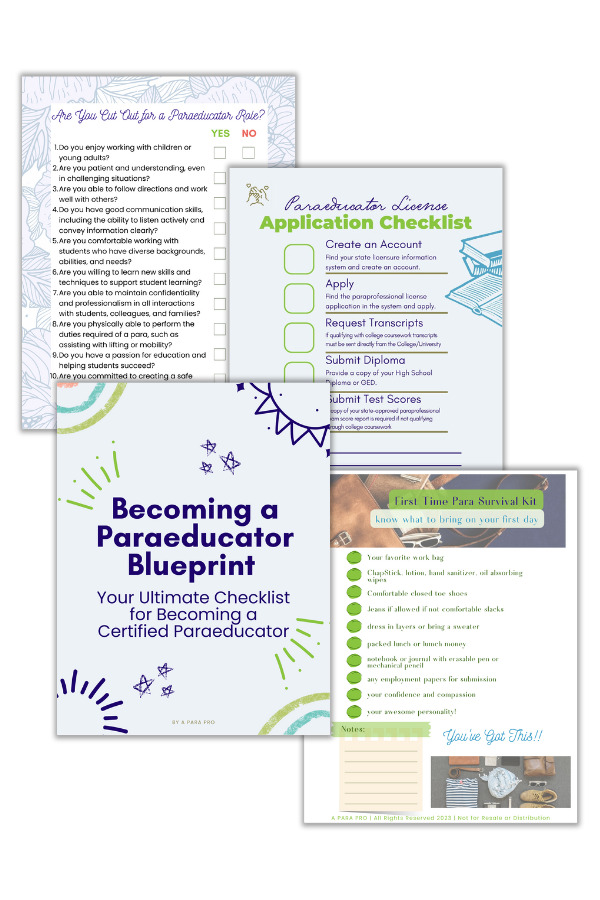
If you want help walking into interviews feeling prepared—not panicked—grab the Interview Success Bundle part of the Becoming a Para System with:

- Common questions
- Answer prompts
- Planning pages
- Confidence boosters
Preparation doesn’t remove nerves—but it does make them manageable.